Italian Mouth Idioms
Exercise to test your knowledge of Italian mouth idioms. Match the mouth idiom on the left with its definition on the right.
Read more
Exercise to test your knowledge of Italian mouth idioms. Match the mouth idiom on the left with its definition on the right.
Read moreExercise to test your knowledge of Italian food idioms. Match the food idiom on the left with its definition on the right.
Read more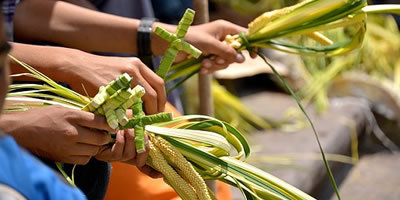
“Natale con i tuoi, Pasqua con chi vuoi… e Pasquetta?” (Christmas with your parents, Easter with whoever you want… and Easter Monday?) La Pasqua è una festività molto sentita in tutta Italia, tradizioni, usanze e cibi particolari accompagnano la sua celebrazione. Anche il periodo che precede la Pasqua, è molto sentito da tutta la comunità cristiana e in Sardegna […]
Read moreExercise to test your knowledge of Italian bread idioms. Match the bread idiom on the left with its definition on the right.
Read moreExercise to test your knowledge of Italian water idioms. Match the water idiom on the left with its definition on the right.
Read moreExercise to test your knowledge of Italian fish idioms. Match the fish idiom on the left with its definition on the right.
Read moreExercise to test your knowledge of Italian sheep idioms. Match the sheep idiom on the left with its definition on the right.
Read more
Chi di voi si ricorda le cartoline? Fino a poco tempo fa, quando si era in viaggio, era quasi d’obbligo spedire un biglietto con bellissime immagini dei posti visitati. Era un piccolo pensiero per chi era rimasto a casa, il destinatario sognava posti bellissimi, le immagini ritratte avevano dei colori straordinari: albe d’orate, tramonti rosati, mari turchesi e prati color […]
Read moreExercise to test your knowledge of Italian horse idioms. Match the horse idiom on the left with its definition on the right.
Read moreExercise to test your knowledge of Italian dog idioms. Match the dog idiom on the left with its definition on the right.
Read more
Il sistema scolastico italiano si suddivide in: Scuola dell’infanzia: bambini dai circa 3 ai 6 anni. Scuola primaria: durata 5 anni. I bambini imparano a scrivere e a leggere, apprendono le prime nozioni di storia, geografia, matematica, grammatica italiana, scienze, musica, disegno ecc. Da pochi anni è obbligatorio l’insegnamento della lingua inglese e dell’informatica. Scuola secondaria di primo grado (scuola media): durata […]
Read moreBoth forms are correct but have two different meanings. When you want to indicate uncertainty about the content of the sentence you use the form chissà, written all attached and with the emphasis on the “a”. Chissà is an adverbial phrase that indicates uncertainty or hope and is also used in other cases with the meaning of “maybe”. Chissà a […]
Read more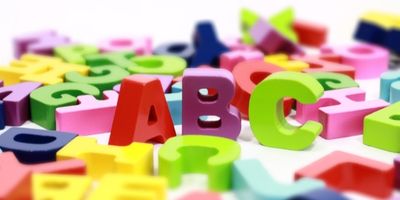
The Italian alphabet is made up of 21 letters: 16 consonants 5 vowels Listen to the Italian alphabet: A;a a B;b bi C;c ci D;d di E;e e F;f effe G;g gi H;h acca I;i i L;l elle M;m emme N;n enne O;o o P;p pi Q;q qu R;r erre S;s esse T;t ti U;u u V;v vu / vi […]
Read moreIn the first lesson of the course, Veronica explains how to introduce yourself, say where you are from and what you do.
Read moreThe apostrophe is a graphic sign (‘) which in Italian is used to indicate: the dropping of the final vowel of the word when followed by a word starting with a vowel (elision); the cancellation of the vowel, consonant or syllable at the end of the word (truncation). 1. In the first case, the apostrophe is mandatory with: the definite […]
Read more