Circus Maximus, Rome – Italian Culture

Il Circo Massimo era un antico circo per gli spettacoli di Roma. Situato tra il Palatino e l’Aventino, è ricordato come sede di giochi sin dagli inizi della storia della città: nella valle sarebbe avvenuto il mitico episodio del ratto delle Sabine (ve lo immaginate un topo con le sue amiche che si chiamano tutte Sabina? No dai… Era un grande spettacolo organizzato per attirare gli abitanti […]

Read more

“The Mouth of Truth”, Rome – Italian Culture

La Bocca della Verità è un antico mascherone in marmo, costruito in una parete della chiesa di Santa Maria in Cosmedin: simboleggia il volto di un fauno, un dio per metà uomo e per metà bestia con la bocca spalancata… Forse perché non ha dormito o ha fame! Se è così, state lontani! La sua leggenda racconta che i bugiardi che mettono la mano dentro la […]

Read more

Trevi Fountain, Rome – Italian Culture

Molto importante è anche la Fontana di Trevi. Il tema della scultura è il mare: c’è un cocchio a forma di conchiglia trainato da cavallucci marini, a loro volta preceduti da tritoni (in stile Sirenetta-in fondo al maaar!), sul quale è adagiata la grande statua di Oceano, affiancata dalle statue della Salubrità e dell’Abbondanza. Una celebre tradizione vuole che porti fortuna lanciare una moneta nella fontana volgendole le spalle, perché in questo […]

Read more

Discover Easter in Italy

Cosa si fa a Pasqua in Italia? Cos’è la Pasquetta? Curiosi? Veronica ci spiega tutte le parole indispensabili per conoscere sul serio la Pasqua in Italia. Per esempio, il fantastico uovo di Pasqua, che esiste di tutti i tipi e di tutte le forme oppure la golosissima colomba, un pezzo immancabile della tradizione dolciaria italiana. Ci sono poi parole derivate […]

Read more

Easter and Easter Monday in Italy

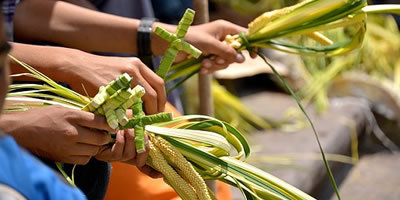
“Natale con i tuoi, Pasqua con chi vuoi… e Pasquetta?”   (Christmas with your parents, Easter with whoever you want… and Easter Monday?) La Pasqua è una festività molto sentita in tutta Italia, tradizioni, usanze e cibi particolari accompagnano la sua celebrazione. Anche il periodo che precede la Pasqua, è molto sentito da tutta la comunità cristiana e in Sardegna […]

Read more

Colors according to men and women

Chi di voi si ricorda le cartoline? Fino a poco tempo fa, quando si era in viaggio, era quasi d’obbligo spedire un biglietto con bellissime immagini dei posti visitati. Era un piccolo pensiero per chi era rimasto a casa, il destinatario sognava posti bellissimi, le immagini ritratte avevano dei colori straordinari: albe d’orate, tramonti rosati, mari turchesi e prati color […]

Read more

The Italian Education system

Il sistema scolastico italiano si suddivide in: Scuola dell’infanzia: bambini dai circa 3 ai 6 anni. Scuola primaria: durata 5 anni. I bambini imparano a scrivere e a leggere, apprendono le prime nozioni di storia, geografia, matematica, grammatica italiana, scienze, musica, disegno ecc. Da pochi anni è obbligatorio l’insegnamento della lingua inglese e dell’informatica. Scuola secondaria di primo grado (scuola media): durata […]

Read more

Is it written “ce n’è” or “ce ne”?

Both forms are correct but have different meanings. Ce n’è is a very common expression in colloquial Italian. However, it is often difficult to figure out how to write this expression correctly. Ce n’è is made up of the particles “ce” and “ne” and the third person singular of the present indicative of the verb to be “è”. The pronominal […]

Read more

Is it written dopodiché, dopo di che or dopodiche?

Three words that united form one; its use can be twofold: it can have the same intent as “after” (consecutive-temporal function), or it can introduce a condition caused by the previous action (adversative function). Dopo di che it is what we can define as the original form, without an accent because “che” by itself never requires an accent. Lucia ha […]

Read more

Is it written “chissà” or “chi sa”?

Both forms are correct but have two different meanings. When you want to indicate uncertainty about the content of the sentence you use the form chissà, written all attached and with the emphasis on the “a”. Chissà is an adverbial phrase that indicates uncertainty or hope and is also used in other cases with the meaning of “maybe”. Chissà a […]

Read more

Is it written e or ed, a or ad?

In Italian the conjunction “e” and the simple preposition “a” in some cases take the final “d” and become “ed” and “ad“. Ed and ad are used only when the following word begins with the same vowel. Gli ho detto di studiare ed esercitarsi meglio per l’esame. Ho aiutato Marco ad aggiustare il suo computer. Sono andata ad ascoltare il […]

Read more

Is it written tuttavia or tutta via?

The correct form is tuttavia, all one word. Tuttavia is an adversative conjunction, or concessive, used to connect two sentences that express a contrast. Tuttavia means “eppure”, “ciò nonostante”, “ma”. Mario stava male, tuttavia è andato a scuola. Oggi ha piovuto tutto il giorno, tuttavia fa caldo. Ho trovato traffico mentre andavo a lavoro, tuttavia sono arrivato in orario. The […]

Read more

The apostrophe in Italian

The apostrophe is a graphic sign (‘) which in Italian is used to indicate: the dropping of the final vowel of the word when followed by a word starting with a vowel (elision); the cancellation of the vowel, consonant or syllable at the end of the word (truncation). 1. In the first case, the apostrophe is mandatory with: the definite […]

Read more

The Italian accent

The accent determines the pronunciation of the words. In Italian it is always and only used on vowels, and never on consonants. In Italian we distinguish between: tonic accent; graphic accent. 1. The tonic accent All Italian words have the tonic accent which falls on one of the syllables of the word and determines a more marked pronunciation of this […]

Read more

Qualche + singular or plural?

The indefinite adjective qualche is ALWAYS followed by a noun in the singular. Indefinite adjectives are used to indicate an indefinite quantity and agree in gender and number with the noun they refer to. Qualche means “a number of” and requires the noun to be singular, even when it refers to more than one thing. Quando vado a fare la spesa, […]

Read more
1 8 9 10 11 12 40